Australia’s corporate pulse fell again in April, handing the Reserve Bank another data point to mull over as it weighs its next move on interest rates.
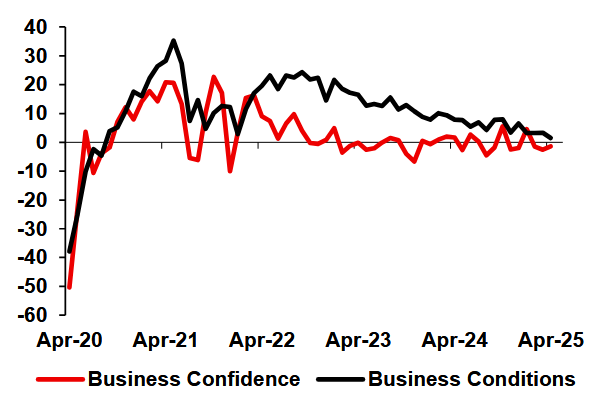
NAB’s widely watched Monthly Business Survey shows the headline business conditions index fell to its weakest reading since the first COVID‑19 lockdowns in 2020. Business confidence, meanwhile edged up slightly.
“One of my two favourite indicators of the Australian economy, NAB business conditions, fell 2 points to +2 in April,” said Ivan Colhoun, CreditorWatch chief economist.
“At face value, the continued easing in business conditions supports a further interest‑rate reduction by the RBA at its Board meeting next week.”
Get the best of Startup Daily straight to your inbox
Want to know the latest in startup news? Subscribe to our daily news and analysis coverage on what’s happening to ANZ startups, investors and the broader ecosystem. And best of all, it's FREE!
By continuing, you agree to our Terms & Conditions and Privacy Policy.
NAB’s latest Monthly Business Survey results shows conditions at their lowest point since the pandemic. Source: NAB
Profitability took the biggest hit, sliding four points, while trading conditions and hiring intentions were effectively flat. The survey’s capacity utilisation measure reversed March’s surprise spike, dropping to 81.4 per cent, back to its long‑run average for the first time in almost four years.
Colhoun argued that the capacity‑utilisation trend “is a good indicator of unemployment, inflation and ultimately interest rates,” noting the return to average utilisation underscores a cooling in demand that could keep upward price pressures contained.
Industry readings were uneven with recreation and personal services continuing to post strong conditions, but retail and manufacturing stayed stuck in negative territory. Mining conditions whipsawed again, swinging sharply lower after March’s surge. Finance, property and business services also weakened.
Labour‑cost growth held steady at a quarterly pace of 1.6 per cent, but purchase‑cost growth accelerated to 1.7 per cent, and retail price growth jumped to 1.4 per cent. Coulhoun said the levels, if sustained, “would be inconsistent with inflation remaining at the midpoint of the RBA’s 2.5 per cent target”.





Comments